Hinduism
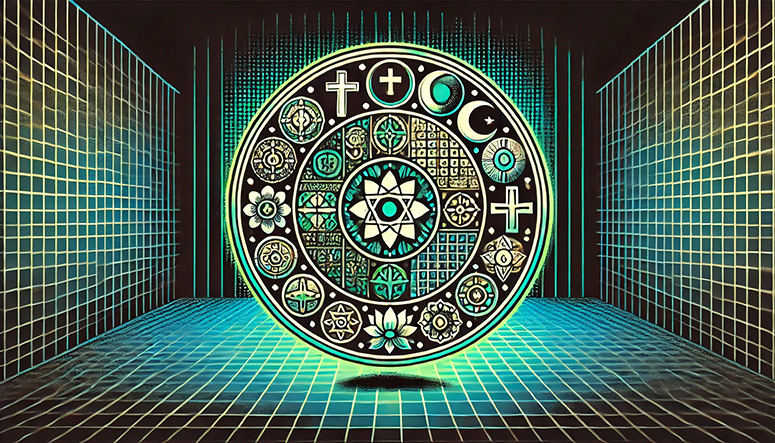
Hinduism encompasses a vast and diverse array of spiritual traditions, practices, and philosophies native to India. As one of the world's oldest religions, Hinduism has profoundly influenced the religious, cultural, and social landscape of South Asia and beyond. With an estimated 1.2 billion followers worldwide, it is the third-largest religion globally. Characterized by its rich tapestry of beliefs, rituals, and mythologies, Hinduism recognizes a multitude of deities, divine figures, and spiritual paths. This inclusivity has allowed for an extraordinary range of interpretations, customs, and sects to flourish within the religion. Nonetheless, certain core principles and values are widely shared among Hindus, including the pursuit of Dharma (duty/ethics), Artha (prosperity/work), Kama (desire/passion), and Moksha (liberation/salvation). Hinduism's emphasis on personal spiritual growth, self-realization, and the attainment of inner peace has led some to adopt a more agnostic or atheistic worldview. Consequently, many Hindus identify as agnostics while still maintaining a connection to their cultural heritage and religious traditions. This openness to diverse perspectives and interpretations is one of Hinduism's most defining features. In summary, Hinduism is a complex and multifaceted religion that has evolved over millennia, encompassing various spiritual paths, beliefs, and practices. It is characterized by its inclusivity, adaptability, and focus on personal growth, making it an appealing and enduring religious tradition for countless individuals across the globe.
Child Hierarchical Categories
[Atheism]
[Buddhism]
[Christianity]
[Deism]
[Islam]
[Jainism]
[Judaism]
[Monotheism]
[Nontheism]
[Pantheism]
[Shintoism]
[Sikhism]
[Spiritual but not religious]
[Taoism]
External Links
- [islam-hinduism.com] Islam and Hinduism - Your Way to a Better Understanding of Islam
- [hinduismtoday.com] Home - Hinduism Today
- [Dharmic.org] Dharmic Religions - Buddhism, Hinduism, Jainism, Sikhism, religions which originated in India