Circuit Boards
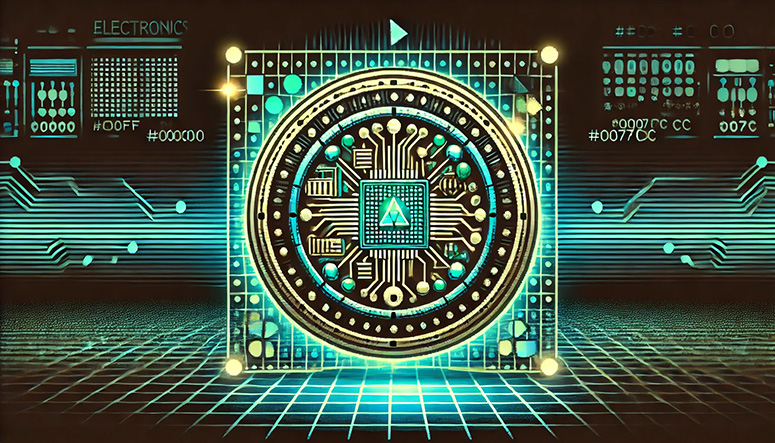
Circuit boards serve as the backbone of modern electronics, acting as the central nervous system that connects and regulates the flow of information between various components. They are typically made of non-conductive materials such as fiberglass or plastic, with conductive pathways etched onto their surface to form intricate patterns. These pathways, known as traces, allow electricity to travel between different parts of a circuit, enabling communication and data processing. At the heart of many circuit boards are microprocessors, which serve as the brain of the system. These tiny chips contain millions or even billions of transistors, which can switch on and off at incredibly high speeds to perform complex calculations and logic operations. In combination with memory modules and input/output devices, microprocessors form the foundation of modern computers and artificial intelligence systems. Circuit boards come in a variety of shapes and sizes, ranging from small, single-layer boards used in simple consumer electronics to large, multi-layer boards used in high-performance computing systems. They may also incorporate a range of specialized components, such as power regulators, filter circuits, and signal conditioning devices, to ensure reliable operation under a wide range of conditions. Overall, circuit boards are an essential component of modern electronics, enabling the creation of complex, integrated systems that can perform a wide range of functions. From smartphones and laptops to self-driving cars and advanced robotics, circuit boards play a critical role in driving innovation and progress in technology.
Child Hierarchical Categories
[Artificial Intelligence Software]
[Computer Components]
[Data Storage Devices]
[Desktop Computers]
[Digital Cameras]
[Electronic Accessories]
[Electronic Boards]
[Laptop Computers]
[Microprocessors]
[Network Hardware]
[Operating Systems]
[Peripherals]
[Printed Circuit Boards]
[Server Hardware]
[Software Applications]
[Tablet Computers]
[Video Game Consoles]
External Links
- [PrintedCircuitBoards.com] Printedcircuitboards.com
- [CircuitBoards.com] PCB Fabrication Assembly | KF Electronics | Michigan
- [Sunstone.com] Sunstone Circuits Printed Circuit Boards | A Division Of ASC
- [eocb.net] vario-optics ag – Electro-Optical Circuit Boards Swiss Made
- [dinosaurelectronics.com] Dinosaur Electronics Home. High quality circuit boards for RV appliances.
- [itacoilweb.com] Transformers and Inductors for printed circuit boards - ITACOIL
- [p3ti.com] Printed circuit boards - PCB producer -NCAB Group
- [Multilayer.com] Printed Circuit Board Experts | Multilayer Technology
- [jtaglive.com] The easy-to-use and extremely economic printed circuit board debug tool - JTAG Live
- [ipcb.com] PCB Printed Circuit Board and PCBA manufacturing
- [hytecrepair.com] Factory Authorized Circuit Board Repair by Hytec Dealer Services, Inc.
- [hkgt.net] GT International | Drone, Chip, Circuit Board
- [fcie.us] Circuit Board Repair | Electronic Control Refurbishing
- [axiommfg.blogspot.com] Axiom Manufacturing - Circuit Board Assembly